If you want room to spread out in Brevard without giving up access to Melbourne, The Woodlands of Lake Washington is the kind of place that naturally gets your attention. Acreage can open the door to more storage, hobby space, and outdoor living, but it also comes with more details to verify before you buy. When you understand how zoning, utilities, drainage, and HOA rules work here, you can shop with a lot more confidence. Let’s dive in.
Why acreage living stands out here
The Woodlands of Lake Washington is an active homeowners association in Melbourne with roots going back to 1987. That long-established setting can appeal if you want a neighborhood feel paired with larger parcels and a little more breathing room than a standard subdivision often offers.
The location also connects you to one of the area’s best-known natural features. Lake Washington Park includes a freshwater two-lane boat ramp, an airboat launch area, a 120-foot fishing pier, and parking for cars and trailers. For buyers who enjoy boating, fishing, or simply being near the water, that adds real lifestyle value.
There is also an important practical side to this location. Brevard County notes that Lake Washington is tied to a primary drinking-water supply for Central and South Brevard, which is one reason land use near the lake gets extra attention. In this area, acreage living can be rewarding, but it usually requires more due diligence than a typical in-town lot.
What “usable space” really means
A larger lot does not always mean every part of that lot can be used the way you imagine. In The Woodlands of Lake Washington, the usable portion of a parcel may be shaped by setbacks, easements, tree protections, wetland limits, driveway layout, and surface-water buffer requirements.
Brevard County specifically advises buyers and applicants to confirm the official zoning classification using the county GIS Zoning and Future Land Use map. That matters because parcels in acreage-style areas can have different rules for additions, detached garages, workshops, barns, and other structures.
If a planned use goes beyond what the zoning allows, the process can get more involved. Variances and rezonings may require staff review, public hearings, and added documentation. For a buyer, that means the timeline and cost of getting approval can become part of the decision, not just the sales price.
Common zoning issues to check
Some local zoning districts allow the spacious feel buyers want, but the details matter.
- RU-1-7 is intended for spacious single-family residential development.
- In RU-1-7, accessory buildings must be behind the front building line.
- In RU-1-7, accessory buildings must be at least five feet from rear and side lot lines.
- In RU-1-7, accessory buildings must stay at least five feet away from other structures.
- AU zoning allows agricultural uses and permits barns or stables, but those must be 200 feet from any property line.
- AU(L) is a lower-intensity variation with a more residential feel on smaller lots.
- ARR is aimed at large-lot residential areas with rural character, often at one acre or more.
ARR zoning also comes with a useful caution from the county code. It notes that infrastructure in these areas may be inadequate or may need significant improvement. That is another reminder to look past the lot size and study the full ownership picture.
Storage options need a rule check
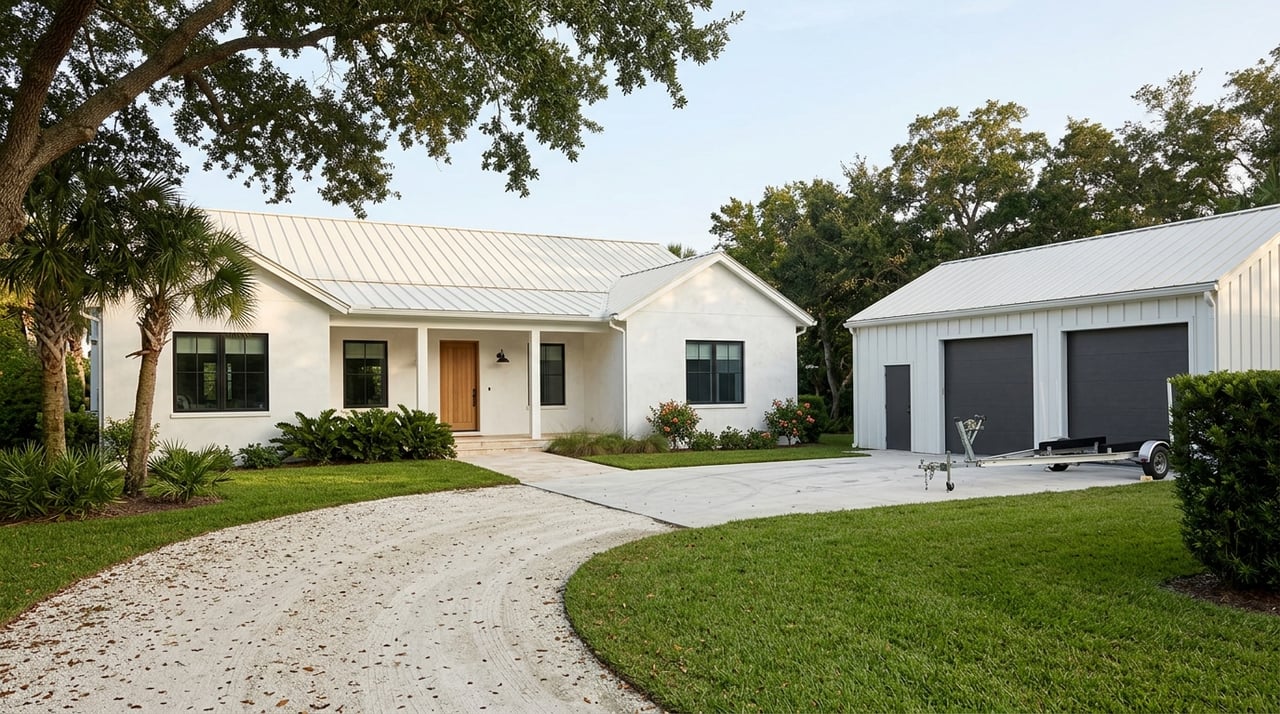
One of the biggest reasons buyers look at acreage is storage. You may want space for an RV, boat trailer, work equipment, hobby gear, or a detached garage that keeps everyday life less cluttered. In this neighborhood, that can be possible, but you should confirm both county rules and HOA standards before you count on it.
Brevard County’s code-enforcement guidance says recreational vehicles and recreational equipment may be parked, located, or stored on developed single-family or multifamily residential properties. They are not allowed on vacant property, and they cannot be used for residential purposes.
The county also gives a practical rule of thumb for residential properties. RVs generally must stay within the property boundaries, the county cites a limit of two per property with one in front of the house, and they should be parked on the driveway. Commercial vehicles are generally prohibited from parking in residential areas.
Accessory structures to think about
Brevard County uses a broad definition for accessory structures. Depending on the parcel and zoning, that can include:
- Garages
- Sheds
- Greenhouses
- Gazebos
- Pools
- Private residential boat docks
That said, use matters just as much as size. The county code says accessory buildings may not include living quarters or a kitchen unless they qualify as a guesthouse. It also says tents, lean-tos, and sheds cannot be used as a residence, whether temporary or permanent.
So if you are picturing a workshop, oversized garage, or equipment shed, the smart question is not only Can I build it? The better question is Can I build it where I want it, at the size I want, and use it the way I expect?
Water access and boat-friendly living
For some buyers, acreage near Lake Washington is about more than elbow room. It is about having a place that works with a boating lifestyle, whether that means trailer storage at home or direct water access.
In unincorporated Brevard County, a boat dock, covered boat dock, or pier is considered an accessory use in all residential zoning classifications. Those structures still must meet county building standards and final survey requirements, so water access plans should be reviewed carefully before you move forward.
This is where details can make a big difference. A parcel might support driveway boat storage but not the dock style you want. Another property may have water frontage but still be shaped by setbacks, survey issues, HOA rules, or other site constraints.
HOA rules are a separate layer
Because The Woodlands of Lake Washington has an active HOA, county zoning is only part of the story. Deed restrictions and architectural standards can affect what you are allowed to build, store, or display on the property.
In many acreage communities, HOA rules may address fencing, sheds, trailers, visible equipment, or exterior materials. Even if the county code would allow something, the HOA may still limit it. That is why reviewing governing documents early is one of the best ways to avoid surprises.
Utilities and septic deserve close review
In this part of Brevard, utilities are not always one-size-fits-all. A property may be on public water, septic, sewer, or some combination of services, and you should verify the setup for the specific parcel you are considering.
Brevard County’s potable-water planning shows that unincorporated areas are served by several potable-water suppliers, including county utility services and municipal utilities. The county also notes that service can draw from both groundwater and surface-water sources, including Lake Washington and Taylor Creek Reservoir.
There is another local detail worth noting. County commission records show a waterline MSBU tied to The Woodlands of Lake Washington. That makes a title review and tax-bill review especially important so you can confirm whether any current special-district charges apply to the property.
Septic status can affect long-term costs
Septic systems remain common across Brevard County. The county’s Save Our Indian River Lagoon factsheet says there are more than 80,000 septic systems countywide.
That matters because future utility decisions can be expensive. The same county factsheet estimates that removing a septic system and connecting to sewer can cost about $20,000 per lot, depending on site conditions. If you are comparing homes, septic status is not a small detail. It is part of your real ownership cost.
Drainage, trees, and environmental review
Lake Washington area properties can involve more review than buyers expect, especially on larger or wooded lots. Brevard County has a specific Lake Washington Area regulation that applies to properties in the unincorporated area within two miles of Lake Washington, west of I-95, and within the St. Johns River riverine floodplain.
The county says these rules exist because the area includes sensitive lands near a primary drinking-water supply. In practical terms, that can mean added scrutiny around drainage, clearing, and buffer impacts.
For larger wooded parcels, natural-resources review may also come into play. Brevard requires a tree and vegetation survey for lots greater than 1.25 acres if they have canopy or trees over 10 inches DBH. The county also requires a surface-water buffer line survey for properties on Lake Washington, the St. Johns River, or the Indian River Lagoon system.
These requirements are designed to conserve native vegetation, protect specimen trees, promote aquifer recharge, reduce erosion, and preserve wetland function and acreage. For you as a buyer, the takeaway is simple: the lot lines on paper may not tell the whole story about how the land can be improved.
Budget for ongoing ownership costs
When you buy acreage, monthly ownership costs can look a little different from what you might expect in a more typical neighborhood. Along with taxes, insurance, and standard home maintenance, there can be local service costs tied to the parcel.
Brevard’s stormwater utility is a non-ad valorem assessment, currently $64 for a single residential unit. Those funds support water-quality and water-quantity projects, so it is one more line item to understand as you review ownership expenses.
County services matter too when you are planning day-to-day life. In unincorporated Brevard, curbside garbage is collected twice per week, while recycling and yard waste are collected once per week. On larger lots, that kind of routine service detail can be more useful than it sounds during the buying process.
A smart buying approach for Woodlands acreage
If you are drawn to The Woodlands of Lake Washington, the opportunity is real. You may find the extra room you want for outdoor living, recreation gear, hobby space, or a more flexible property layout, all while staying connected to the Melbourne area.
The key is making sure the parcel fits your real-life plans, not just your wish list. Before you commit, verify zoning, HOA rules, utility type, septic status, possible MSBU charges, drainage limits, tree and wetland constraints, and any surface-water buffer requirements. That extra homework can protect your budget and help you choose a property that works the way you want it to.
If you want local guidance on buying land or a home in this part of Brevard, Island Pineapple Realty brings a hands-on, neighborhood-focused approach that helps you look beyond the listing photos and into the details that matter.
FAQs
What makes The Woodlands of Lake Washington different from a typical subdivision?
- The neighborhood offers a larger-parcel setting, but buyers should expect closer review of zoning, HOA rules, drainage, utilities, and environmental constraints than they might see in a more standard subdivision.
Can you park an RV or boat at a home in The Woodlands of Lake Washington?
- Brevard County says recreational vehicles and recreational equipment may be parked or stored on developed residential property, not vacant property, and they cannot be used for residential purposes, but you should also verify HOA rules for the specific property.
Can you build a detached garage or workshop on acreage near Lake Washington?
- Possibly, but the answer depends on the parcel’s zoning, setbacks, structure placement rules, and any HOA restrictions, so it is important to confirm what is allowed before you buy.
Do homes in The Woodlands of Lake Washington always have public utilities?
- No, utility setup can vary by parcel, so you should verify whether a property has public water, septic, sewer, or a combination of services.
Why does septic status matter when buying acreage in Brevard County?
- Septic status affects both day-to-day ownership and potential future costs, and Brevard County estimates that removing a septic system and connecting to sewer can cost about $20,000 per lot depending on site conditions.
Are there extra environmental rules near Lake Washington properties?
- Yes, some unincorporated properties near Lake Washington may be subject to added review for drainage, clearing, buffers, trees, wetlands, and surface-water survey requirements.