Thinking about trading a standard subdivision lot for more space, privacy, and elbow room? An acreage home in The Woodlands of Lake Washington can offer a very different ownership experience than many other Brevard neighborhoods. If you are exploring this area, it helps to look beyond the house itself and understand zoning, flood review, utilities, maintenance, and long-term costs before you buy. Let’s dive in.
Why buyers look at acreage here
The Woodlands of Lake Washington has an active homeowners association on record with the State of Florida, and public property examples suggest a neighborhood pattern of custom single-family homes from the late 1980s and 1990s on lots around one acre. In practical terms, that often means larger homesites, more separation between neighbors, and a more estate-style feel than you may find in a typical planned subdivision.
For many buyers, that extra land is the main draw. You may be looking for space for a pool, room for mature trees, extra garage capacity, or simply a quieter homesite with more breathing room. In this part of Brevard, one-acre living can also appeal to buyers who want flexibility without stepping fully into farm-style property ownership.
Another part of the appeal is the nearby recreation around Lake Washington. Lake Washington Park includes a two-lane boat ramp, airboat launch, fishing pier, and access to the St. Johns River, which adds to the lifestyle value of living near the lake.
What homes are like in The Woodlands
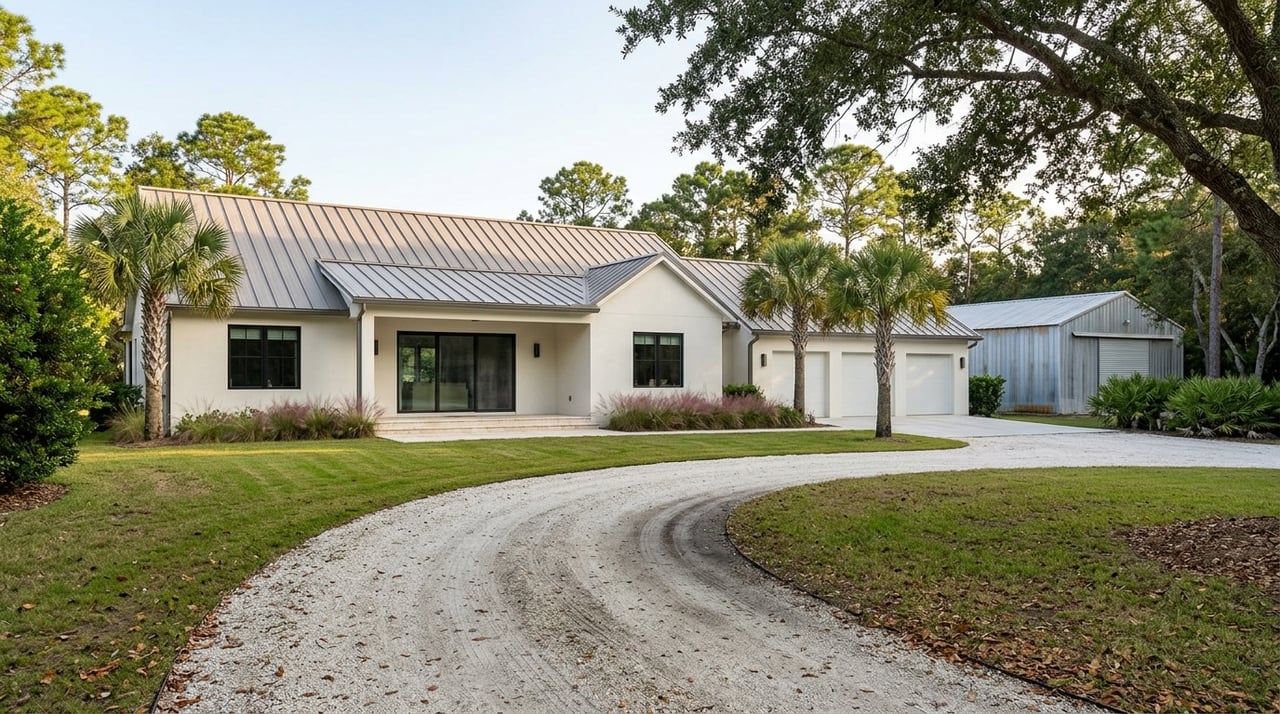
Based on public property examples, buyers in The Woodlands of Lake Washington may encounter homes roughly in the 2,700 to 3,900 square foot range with wooded lots, pools, and multi-car garages. That combination can be attractive if you want both indoor space and outdoor privacy.
At the same time, this is the kind of neighborhood where details can vary from parcel to parcel. Utility setup, drainage conditions, vegetation, and lot usability may differ more than they would in a newer, more standardized community. That is why acreage buyers usually need to evaluate each property on its own merits.
Why parcel-by-parcel research matters
Acreage homes often look simple at first glance: a larger lot, a larger house, and more privacy. In reality, the buying process usually requires a deeper review of land use, utilities, flood exposure, and site conditions.
Brevard County specifically notes that the Lake Washington area is environmentally sensitive because it is near a primary drinking-water supply for Central and South Brevard. According to the county’s Natural Resources ordinances page, site work and redevelopment in applicable areas can face added review.
That matters if you are thinking ahead to future improvements. Clearing trees, expanding outdoor areas, changing drainage, or reworking parts of the site may not be as simple as they would be on a smaller suburban lot.
Flood and drainage deserve close review
If you are considering acreage near Lake Washington, flood review should be part of your early due diligence. Brevard County’s flood zone information resources explain that flooding can result from heavy rainfall as well as the St. Johns River, and the county serves as the official local repository for FEMA flood maps.
Just as important, the county notes that standard homeowners insurance usually does not cover flood damage. If flood insurance is needed or recommended, timing matters because National Flood Insurance Program policies can have a waiting period before coverage takes effect.
Drainage is also part of everyday ownership. The same county guidance warns that debris in ditches and drainage systems can reduce capacity and contribute to localized flooding. On a larger homesite, that can translate into ongoing attention to yard grading, swales, culverts, and cleanup after storms.
Tree protection and land clearing can affect plans
Many buyers love acreage because of the mature trees and natural screening. Those features can be a major part of the neighborhood’s character, but they can also come with rules.
Brevard County maintains land-clearing and tree-protection regulations intended to conserve native vegetation, preserve specimen trees, and reduce erosion. The county also states that when a property is on Lake Washington or the St. Johns River, a survey is required so the applicable surface-water buffer line can be shown.
If you are buying with renovation plans in mind, ask early whether your intended improvements could trigger extra review. That simple step can help you avoid surprises after closing.
Zoning shapes how you can use the land
For acreage buyers, zoning matters almost as much as the home itself. Brevard County staff have described RR-1 as a one-acre minimum district and AU as a 2.5-acre minimum district, with AU generally allowing more intensive agricultural use while RR-1 is primarily residential and can allow horses as ancillary to a single-family home, according to county board discussion documented by Brevard County.
For many buyers, that distinction is useful. You may want room for a more private residential lifestyle without taking on the expectations of a full agricultural property. The best first step is to confirm the parcel’s zoning and future land use using the county’s official mapping tools and zoning process guidance on the Planning and Zoning page.
Hobby use is not the same as agricultural status
Some buyers assume that a larger lot automatically allows broad agricultural use or qualifies for agricultural tax treatment. That is not how it works.
Brevard County Property Appraiser guidance states that agricultural zoning alone does not automatically qualify a parcel for agricultural classification. The land must be used primarily for bona fide agricultural purposes, and the owner must apply during the required filing window, as outlined in the property appraiser report.
If your goal is simply extra space, that may not matter much. But if you are buying with horses, livestock, or tax treatment in mind, you will want to verify what is actually allowed and what would be required.
Utilities may not be what you expect
One of the biggest mistakes acreage buyers make is assuming utility service based on the neighborhood name or location. In this part of Brevard, utility configurations can vary.
County utility guidance notes that Brevard County Utilities only provides water service to Mims and San Sebastian Woods, while the City of Melbourne is one of the county’s major water providers, and its supply includes surface water from Lake Washington. That is a good reminder to confirm service directly for the specific parcel through the county’s utility contact information and FAQ page.
The research available for this neighborhood also suggests that some homes may have city water paired with septic rather than full sewer service. In other words, do not assume that every home has the same setup. Ask for utility bills, seller disclosures, permits when available, and any recent service records.
Septic and well questions can have real costs
If a property has private well or septic components, it is smart to investigate them carefully. The Florida Department of Health recommends that private well owners test for bacteria and nitrate at least once a year, and it notes that common lab costs are about $20 to $30 per sample, according to the state’s private well testing guidance.
The same guidance explains that private well testing is not automatically required at sale. That means buyers should decide whether to order testing as part of their own due diligence rather than assume it will happen automatically.
For septic, the long-term replacement cost is worth understanding even when a system appears to be functioning. Brevard County’s septic system upgrades page reports an overall average completed project cost of about $21,673, which is a strong reminder to budget for future capital expenses.
Larger lots usually mean larger maintenance needs
A one-acre homesite can be a great fit if you value space and privacy, but it often comes with more self-managed upkeep. Mowing, tree trimming, irrigation planning, drainage cleanup, and general landscape care can all take more time and money than you might expect.
For buyers who want a lower-maintenance approach, Florida-Friendly Landscaping principles may help reduce water, fertilizer, pesticide use, and maintenance time. Brevard County’s flood guidance and UF/IFAS resources both support the idea that smart site management can improve long-term ownership efficiency.
If you are considering hobby horse use or small pasture expectations, lot size alone may not tell the whole story. UF/IFAS notes that a mature horse may need roughly 2 to 2.5 acres on less productive pasture or 1 to 1.5 acres on productive, well-managed summer pasture, and continuous grazing is not recommended on smaller acreages. Usable pasture area is what matters most.
Watch for HOA rules and special assessments
Even in a lot-heavy neighborhood, community rules can still matter. State records show an active Woodlands of Lake Washington Homeowners Association, so it is wise to review governing documents, architectural standards, and any applicable fees early in the process.
You should also ask about public assessments. Brevard County’s MSBU program explains that special assessments can be used to fund road resurfacing, water lines, and sanitary sewer line installation, and owners may pay up front or over annual installments for up to 10 years.
That makes the tax bill and closing statement especially important. If an assessment is already attached to the property, you will want to know before you close.
A smart due diligence checklist
If you are serious about buying in The Woodlands of Lake Washington, keep your review focused on the land as much as the house. A practical checklist includes:
- Confirm zoning and future land use through Brevard County’s official tools
- Verify the flood zone and ask whether flood insurance is currently carried
- Request a current survey
- Review easements, drainage obligations, and title exceptions
- Confirm water, sewer, septic, and well details parcel by parcel
- Review HOA documents early
- Ask about any MSBU or other special assessments
- Evaluate tree cover, drainage flow, and usable outdoor space
- Investigate permits or approvals if you plan future site improvements
Is an acreage home here right for you?
If you want more privacy, more room, and closer access to outdoor recreation, an acreage home in The Woodlands of Lake Washington may be a strong fit. The tradeoff is that ownership tends to be more parcel-specific, with more due diligence around flood, drainage, vegetation, utilities, and long-term maintenance.
That does not make these homes harder to love. It simply means the smartest buyers go in with clear eyes and a solid plan. If you want local guidance as you compare lot conditions, utility setups, and neighborhood fit, Island Pineapple Realty can help you navigate the details with a hands-on, local perspective.
FAQs
What should you check before buying an acreage home in The Woodlands of Lake Washington?
- You should confirm zoning, flood zone, survey details, easements, drainage conditions, utility setup, HOA documents, and any special assessments before closing.
Does a Lake Washington acreage home automatically come with sewer service?
- No. Utility service can vary by parcel, and available research suggests some homes in this area may have city water with septic rather than full sewer service.
Why is flood review important for homes near Lake Washington?
- Brevard County notes that flooding can come from heavy rainfall and the St. Johns River, and standard homeowners insurance usually does not cover flood damage.
Can a one-acre homesite in Brevard County be used for agriculture?
- Not necessarily. Zoning and actual use both matter, and agricultural classification for tax purposes is not automatic just because a property has agricultural zoning.
What are the maintenance realities of owning an acreage home in Brevard County?
- Larger lots often require more mowing, tree care, drainage cleanup, irrigation planning, and long-term budgeting for systems like septic.
Why should you review HOA documents in The Woodlands of Lake Washington?
- The neighborhood has an active homeowners association on record, so buyers should review rules, standards, fees, and other community requirements early in the process.